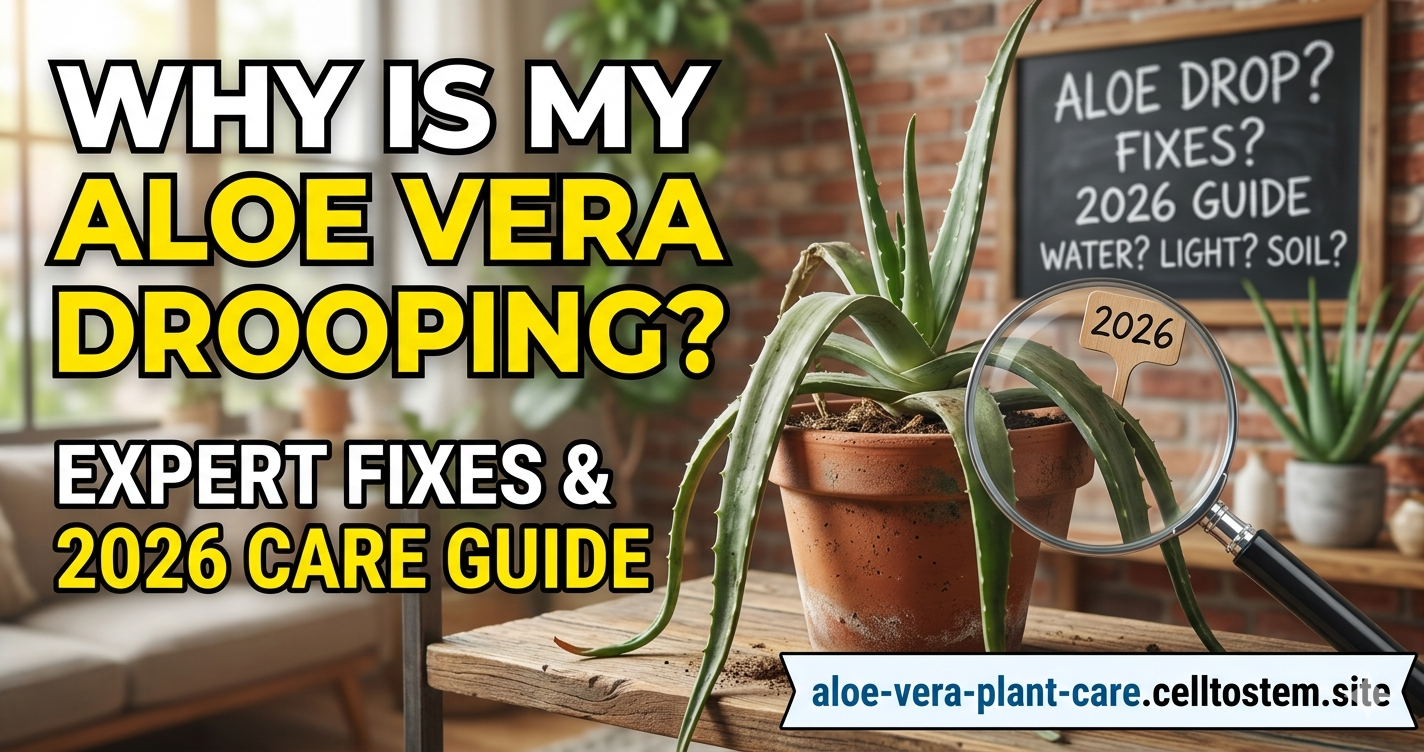
Quick Answer:
The most common cause of aloe vera leaves drooping is overwatering leading to root rot. To fix it, allow the soil to dry out completely, provide 6–8 hours of bright indirect sunlight, and ensure your plant is in a terra cotta pot with well-draining succulent soil.
The Day My “Indestructible” Aloe Hit the Floor
I remember the first aloe vera I ever owned. I treated it like a trophy. I placed it on a mahogany shelf, watered it whenever I felt “nurturing,” and expected it to thrive because, well, everyone says they are impossible to kill. Two weeks later, the once-firm, architectural leaves were slumped over the side of the pot like wet noodles.
I was devastated. As someone who spends a lot of time documenting plant growth and troubleshooting botanical hiccups, I realized that “easy-to-grow” doesn’t mean “ignore-proof.” My mistake? I was loving it to death with a watering can.
If you are staring at aloe vera plant leaves drooping, don’t panic. Whether you’re seeing aloe vera leaf discoloration or just a general lack of “perk,” most of these issues are reversible if you act before the core rots. Let’s dive into the hands-on physics of why this happens and how you can fix it using what I’ve learned from years of trial, error, and eventual success.
1. The “Drowning” Dilemma: Overwatering and Root Rot
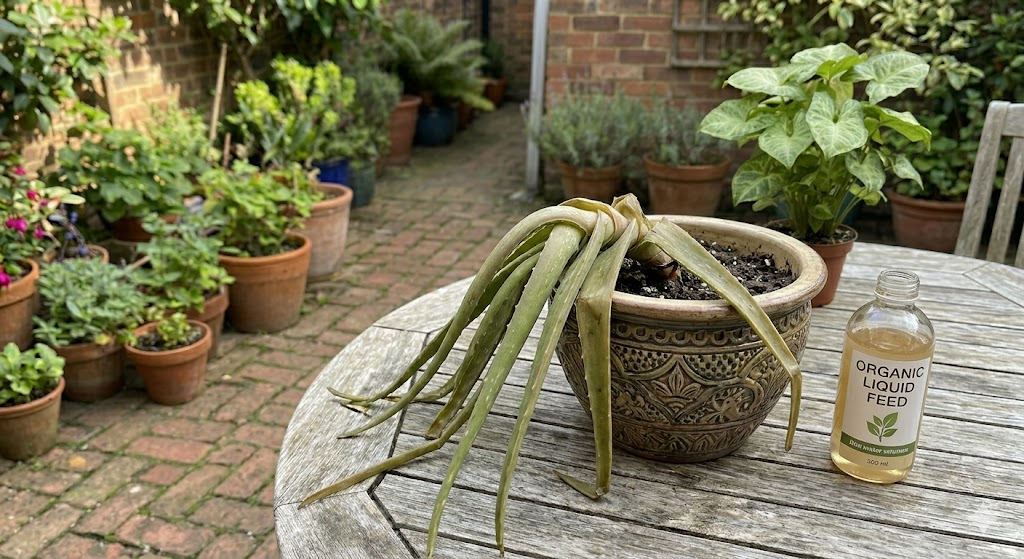
In my experience, 90% of drooping aloes are victims of “Kindness Syndrome.” Aloes are succulents; they store water in their leaves to survive arid conditions. When the soil stays wet, the roots cannot breathe.
Spotting the Signs
When the leaves feel mushy and look translucent, you are likely dealing with aloe vera leaf rot. If you pull the plant out of the pot and see black, slimy roots instead of firm, white ones, you’ve hit aloe vera root rot symptoms.
The Solution
The best way to fix droopy aloe vera caused by water is a total reset. Remove the plant, snip off the rotting roots with sterilized shears, and let the plant air-dry for 24 hours. Then, repot it into a dry mix. I’ve found that the best watering schedule for aloe vera isn’t a calendar-based one—it’s a “finger-test” one. Only water when the top two inches of soil are bone-dry.
2. Choosing the Right Foundation
Early on, I used standard potting soil for everything. That was a mistake. Standard soil holds onto moisture like a sponge, which is a death sentence for an aloe.
The Best Soil for Aloe Vera Drooping Leaves
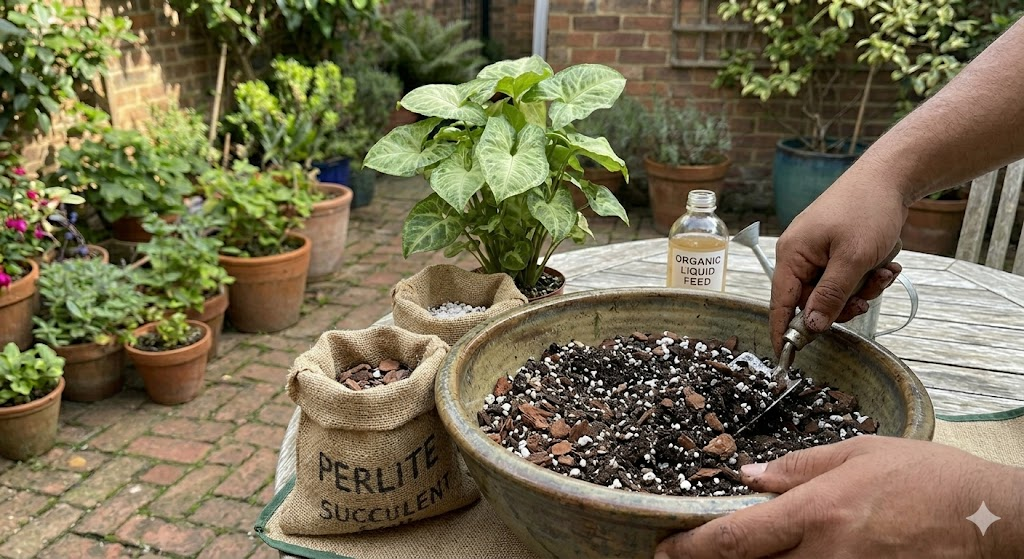
You need a gritty, fast-draining medium. I now swear by a mix that is 50% potting soil and 50% coarse sand or perlite. This mimics their natural desert habitat and prevents the “wet feet” that cause drooping.
The Best Pot for Aloe Vera Plant
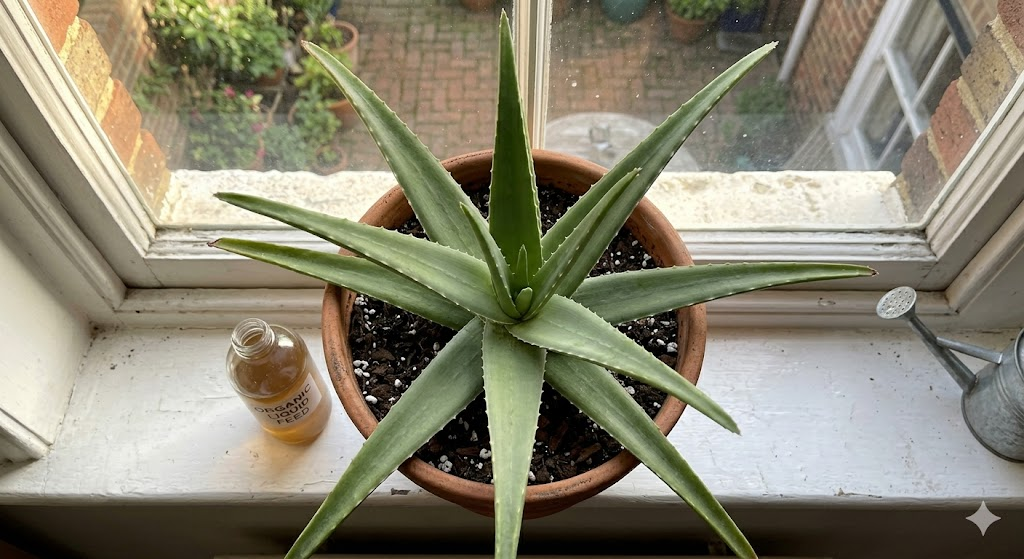
Forget plastic or glazed ceramic if you’re a heavy-handed waterer. The best pot for aloe vera plant is unglazed terra cotta. Because terra cotta is porous, it allows moisture to evaporate through the walls of the pot, providing a safety net against overwatering. Always ensure there is a large drainage hole at the bottom.
3. Lighting: Finding the “Goldilocks” Zone
I once moved an aloe to a dark corner of my office to “brighten the room.” Within a week, the leaves began aloe vera leaf curling and stretching toward the nearest window—a process called etiolation. When the leaves get too long and thin while searching for light, they lose their structural integrity and flop over.
The Best Light for Aloe Vera Leaves
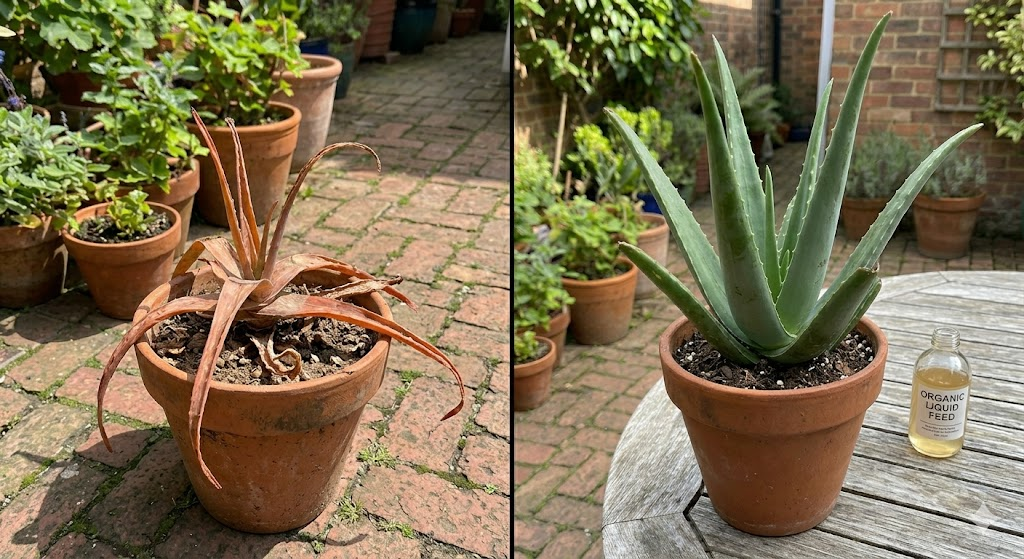
Aloes need bright, indirect sunlight. If you put them in a windowless room, they will droop. However, there is a flip side. If you move a “shade-spoiled” plant directly into 100-degree afternoon sun, you will see aloe vera sunburn leaves—dry, brittle, orange-brown patches that also cause the leaves to lose strength.
Pro Tip: If you see your plant turning a dusty red or brown, it’s getting too much sun. If it’s pale green and falling flat, it needs more light.
4. Temperature Stress and Seasonal Shocks
One winter, I left my favorite aloe near a drafty window. The next morning, it looked like it had given up on life. Aloes are tropical; they hate the cold. Aloe vera temperature stress happens when the thermometer dips below 55°F (13°C).
Conversely, aloe vera repotting shock can cause temporary drooping. If you’ve just moved your plant to a new home, give it a week to settle in before you start worrying. It’s just “moving day” exhaustion.
5. Feeding and Varieties
While aloes aren’t heavy feeders, a little boost helps. The best fertilizer for aloe vera drooping is a phosphorus-heavy, liquid succulent fertilizer diluted to half-strength, applied only during the spring and summer. Avoid high-nitrogen fertilizers, which can cause rapid, weak growth that inevitably droops.
If you are growing indoors, the best aloe vera variety for indoors is Aloe barbadensis Miller. It is hardy, medicinal, and slightly more forgiving of lower light than its more “exotic” cousins.
Expert Troubleshooting: Pests and Diseases
Sometimes, the drooping isn’t about water or light—it’s about uninvited guests. Aloe vera pests and diseases, like mealybugs or aphids, suck the sap out of the leaves, causing them to deflate. Look for white, cottony spots in the “crook” of the leaves. A quick wipe with rubbing alcohol on a cotton swab usually does the trick.
My “Lesson Learned” Summary
After five years of documenting my plant journey, I’ve realized that a drooping aloe is a plant trying to tell you a story. It’s saying, “I’m drowning,” “I’m starving for light,” or “I’m freezing.”
The best aloe vera plant care tips I can give you are:
- Observe first, act second. Don’t just pour water on a drooping plant.
- Feel the leaves. Firm = Happy. Soft = Overwatered. Thin/Flat = Dehydrated.
- Check the drainage. If there’s no hole in the pot, the plant is on a countdown.
Frequently Asked Questions (FAQs)
Q: Can I save an aloe with a broken leaf?
A: Aloe leaves don’t “heal” back together. If a leaf is snapped and drooping, it’s best to cut it off at the base with a clean knife. The plant will seal the wound itself.
Q: How often should I really water?
A: In most indoor environments, once every 2–3 weeks is plenty. In winter, you might only water once a month.
Q: Why are my aloe leaves turning brown and drooping?
A: This is usually aloe vera leaf discoloration caused by either root rot (mushy brown) or sunburn (dry/crispy brown). Check the soil moisture to tell which one it is.
Q: Does my aloe need a bigger pot?
A: Aloes actually like being slightly root-bound. Only repot if the “pups” (baby plants) are taking over the entire surface of the soil.
Q: What is the best way to revive a dying aloe?
A: Stop watering, provide bright indirect light, and check for root health. If the center (the “crown”) is still green and firm, the plant can be saved.
Keep Learning About Your Plants
If you want to dive deeper into specific botanical care or find the latest research on succulent health, you can always Search Google for more Aloe Vera Care Tips.
Final Thoughts
Gardening is a conversation between you and nature. My first failed aloe wasn’t a “failure”—it was a lesson in drainage and patience. By following these steps—using the best soil for aloe vera, ensuring proper light, and mastering the watering—you can turn a drooping plant into a centerpiece of your home.
Happy planting!