
Quick Answer:
Aloe vera plants thrive in 6 to 8 hours of bright, indirect sunlight daily. While they love light, direct midday sun can cause sunburn (orange or brown spots), and too little light leads to “leggy” stretching known as etiolation. For best results, place them near a south or west-facing window with a sheer curtain to filter the harshest rays.
Table of Contents
The “Goldilocks” Rule of Aloe Sunlight
When I first started growing succulents, I figured since aloe vera is a desert native, it should just bake in the sun all day, right? Wrong. I ended up with a shriveled, orange-tinted mess that looked more like a piece of beef jerky than a healing plant. That was my first lesson in aloe vera plant light intensity.
In the wild, these plants often grow in the dappled shade of larger shrubs or rocks. They don’t want the high-noon laser beam of the Sahara; they want the “bright, but protected” vibe of a beach umbrella. In this guide, I’ll share the exact light settings that turned my “jerky” plants into lush, thick-leaved beauties.
Understanding the Basics: Photosynthesis and UV
Aloe plants are master energy converters. Through aloe vera photosynthesis, they turn light into the thick, medicinal gel we all love. However, the aloe vera plant light spectrum matters. They specifically crave blue and red light waves to stay compact and strong. If you give them only “low-quality” light (like a dim corner far from a window), they lose their structural integrity.
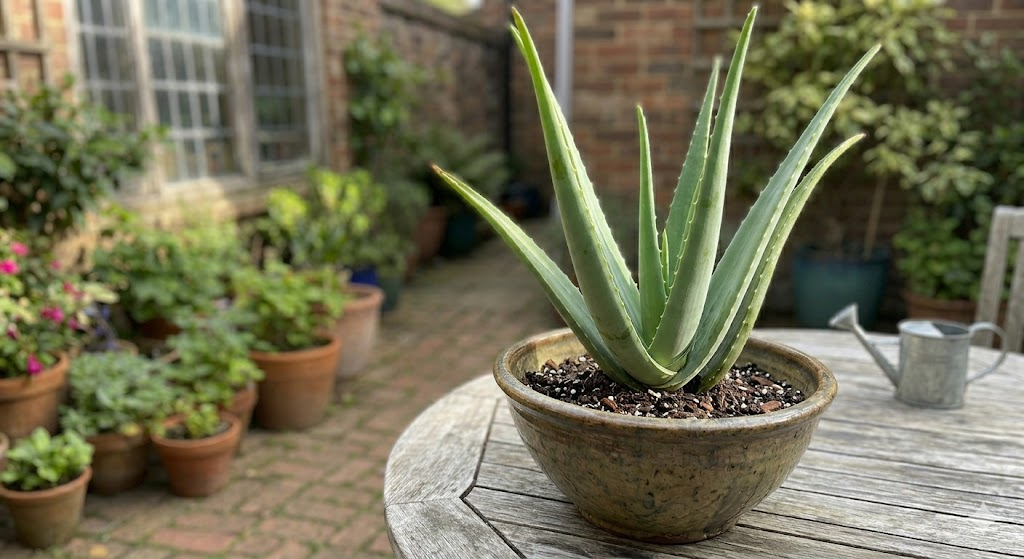
Best Aloe Vera Plant for Indoor Lighting
Indoors, your primary challenge is the “glass filter.” Windows naturally block some of the aloe vera plant UV light that the plant would get outside. Because of this, you actually need a brighter spot indoors than you might think.
1. The South-Facing Window: The Powerhouse
A south-facing window is the “holy grail” for indoor succulents. It provides the longest duration of light throughout the day.
- The Pro Tip: Don’t put the pot directly against the glass. During my second year, I lost a “Tiger Aloe” because the glass acted like a magnifying glass, causing aloe vera plant sunburn. Keep it about 12 inches back.
2. The West-Facing Window: The Afternoon Heat
West windows are great, but they get very hot in the late afternoon. This is often the best aloe vera plant for bright indirect light if you use a sheer curtain. If you notice your plant’s leaf tips turning brown and crispy, the afternoon “photoperiod” (the length of time it’s exposed to light) might be too intense.
3. Artificial Light: The Modern Solution
If your apartment is a “cave” like my first studio was, don’t despair. The best aloe vera plant for artificial light is any standard Aloe barbadensis paired with a full-spectrum LED grow light.
- My Success Story: I once grew a massive aloe in a windowless hallway using a 15W LED bulb kept 10 inches above the leaves for 12 hours a day.
Troubleshooting: Sunburn vs. Etiolation
The plant will literally “talk” to you if you know what to look for. Here is how I learned to read the signs of aloe vera plant light intensity issues.
Identifying Aloe Vera Plant Sunburn
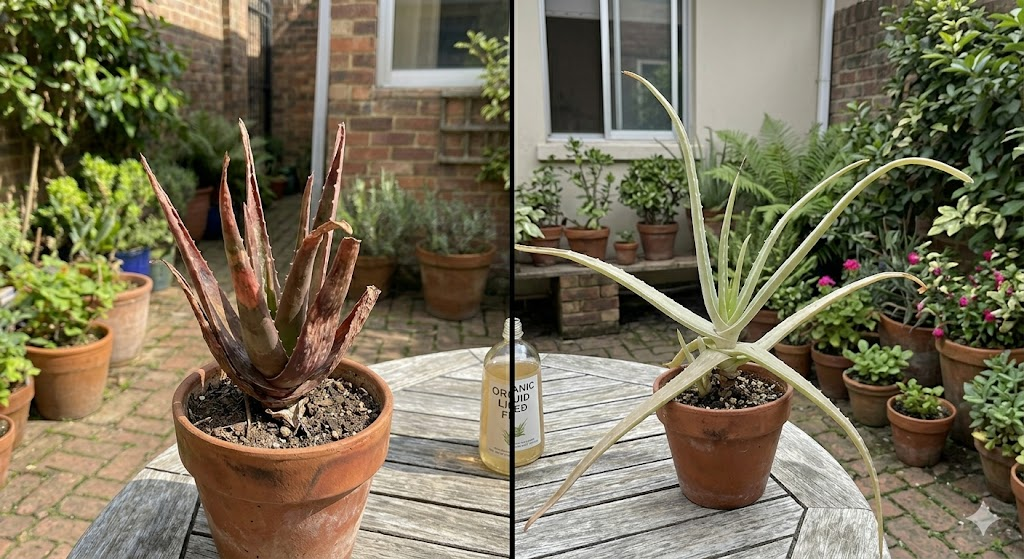
If your plant turns orange, red, or develops “bleached” white spots, it’s getting too much aloe vera plant UV light.
- The Fix: Move it back from the window immediately. Unlike us, aloe “tans” to protect its chlorophyll. Once it turns green again, you’ve found the sweet spot.
The Struggle of Etiolation (Leggy Growth)
Aloe vera plant etiolation is when the plant stretches out, looking thin, pale, and “floppy.” This is the plant desperately searching for a light source.
- The Hard Truth: Once a leaf is stretched out (etiolated), it won’t “shrink” back. You have to move it to a brighter spot to ensure the new growth comes in thick and strong.
Categorizing the Best Aloes for Your Light
Not all aloes are created equal. Depending on your home’s layout, you should choose a variety that matches your reality.
| Light Condition | Best Variety to Choose | Why? |
| Direct Sun | Aloe brevifolia | Very hardy; loves the heat. |
| Bright Indirect | Aloe vera (The Classic) | Perfect for windowsills. |
| Low Light | Gasteraloe Hybrids | Cross-bred to handle dim corners better. |
| Artificial Light | Aloe ‘Blue Elf’ | Stays compact and responds well to LEDs. |
Best Aloe Vera Plant for Low Light Conditions
Let’s be honest: no succulent prefers the dark. But if you have a north-facing window, look for the best aloe vera plant for shaded areas, which is usually a darker-leaved hybrid like the Aloe ‘Black Gem’. These have more chlorophyll to soak up every tiny bit of available light.
Best Aloe Vera Plant for Beginners (Light Wise)
If you’re new, stick to the standard Aloe barbadensis miller. It’s incredibly forgiving. It will survive a bit of sunburn and a bit of stretching while you figure out your home’s succulent light requirements.
Professional Tips for Outdoor Aloe Placement
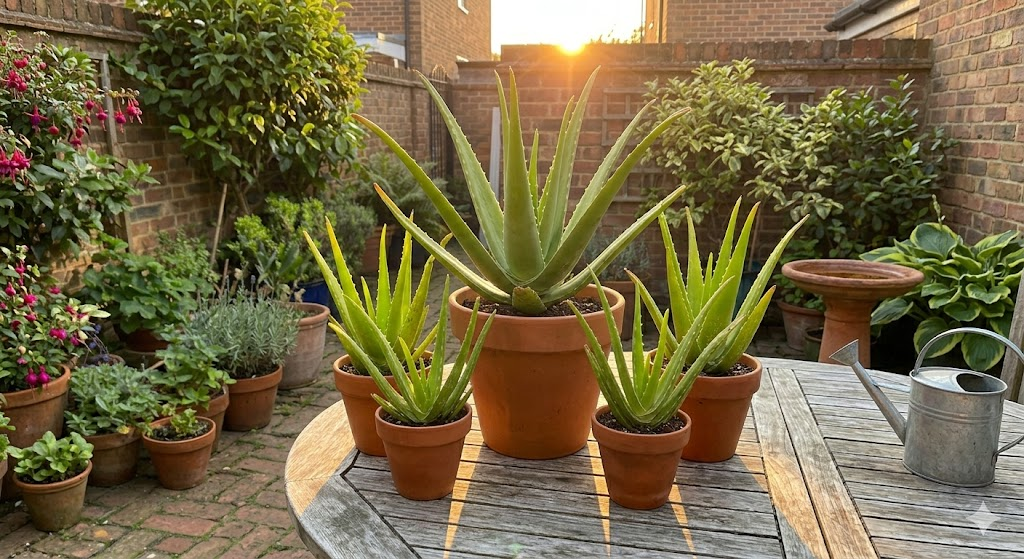
When I moved my collection to my backyard, I nearly killed half of them in a week. Outdoor light is 10x stronger than indoor light.
- Acclimation is Key: Never move a plant from your desk to the porch in one day. Start with 1 hour of morning sun, then 2, then 4, over a two-week period.
- Watch the Afternoon Sun: In most climates, the 2:00 PM sun is too much. The best aloe vera plant for direct sun is one that has been hardened off and lives in a pot large enough to keep its roots cool.
- Shaded Areas: If you have a porch, that’s often the best aloe vera plant for shaded areas. The “bright shade” of a porch is actually brighter than most indoor windows!
The Science of the “Light Meter”
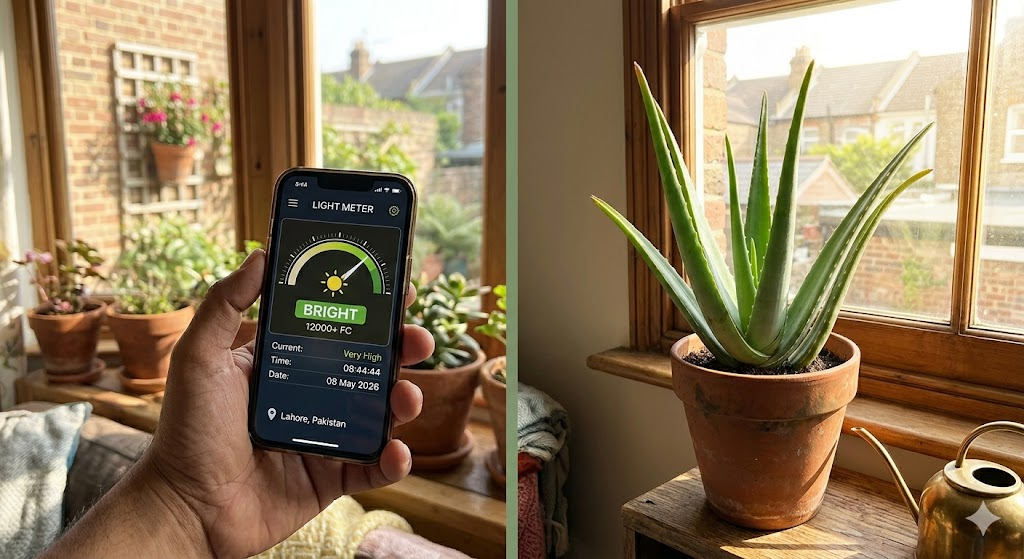
If you want to stop guessing, use a light meter app on your phone. Experts measure light in Foot Candles (FC) or Lux.
- Low Light: 50–100 FC (Barely surviving)
- Medium/Bright Indirect: 200–500 FC (The Sweet Spot)
- Direct Sun: 1,000+ FC (Risk of burn if not acclimated)
Understanding aloe vera plant light intensity through numbers takes the “intuition” out of the equation and gives you the “data” to be a pro.
My Personal “Aloe Fail” and What It Taught Me
A few years ago, I bought a rare “Spiral Aloe.” I put it in my best aloe vera plant for south facing window spot. Within three days, the center turned white. I thought it needed water, so I drowned it. It died.
Lesson Learned: When a plant is light-stressed, its metabolism slows down. Adding water to a sun-stressed plant often leads to root rot because the plant isn’t “working” fast enough to drink it. If you see light damage, change the light first, and wait a week before changing your watering routine.
Frequently Asked Questions (FAQs)
1. Can aloe vera grow in a room without windows?
Only if you use artificial light. No succulent can survive on just standard “office” ceiling lights. You need a dedicated grow bulb with the correct aloe vera plant light spectrum.
2. Why is my aloe vera turning brown but not dry?
This is likely “sun tan” or sunburn. If the leaves are still firm, it’s just too much aloe vera plant light intensity. Move it a few feet away from the window.
3. How many hours of sun does an indoor aloe need?
Aim for at least 6 hours. If you can get it 8 to 10 hours of bright, indirect light, it will grow much faster and produce more “pups” (baby plants).
4. Is a north-facing window okay for aloe?
Usually, no. A north window provides the weakest light. Your plant will likely suffer from aloe vera plant etiolation and become weak and spindly over time.
5. Can I use a regular desk lamp as a grow light?
Regular incandescent bulbs produce too much heat and not enough of the right light wavelengths. Use an LED “Daylight” bulb (5000K-6500K) for a cheap and effective alternative.
Conclusion: Finding Your Plant’s Happy Place
Mastering aloe vera plant sunlight requirements isn’t about following a rigid rulebook; it’s about observation. Look at the color, feel the firmness of the leaves, and watch for stretching. Whether you are searching for the best aloe vera plant for beginners light wise or trying to optimize a south-facing window, remember that consistency is your best friend.
If you ever feel stuck, just think back to the desert: bright mornings, protected afternoons, and plenty of “breathing room.” Get those light levels right, and your aloe will reward you with healing gel for years to come.
Find more information on Google: Search for Aloe Vera Care Tips
Thank You For Visiting Our Website https://aloe-vera-plant-care.celltostem.site/